
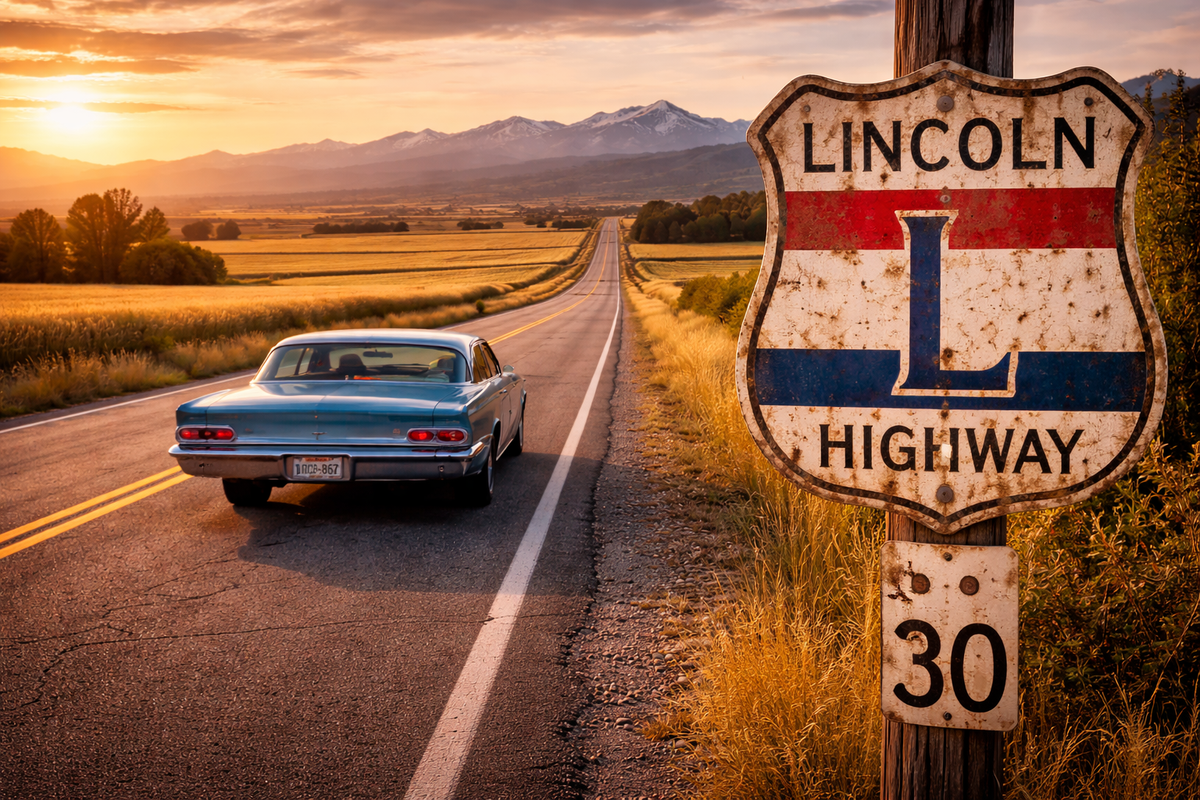
Before interstate highways, before “road trip culture” was a thing, there was the Lincoln Highway—America’s first transcontinental roadway. It’s not one perfect scenic stretch like the PCH. It’s a story drive: old alignments, small towns, vintage bridges, and the feeling of watching the country change, mile by mile.
Treat it like a “best-of” historic route: follow the marked sections where it’s preserved, hop on faster roads when it isn’t, and build your trip around a handful of anchor cities + classic roadside stops.
What the Lincoln Highway Is (in Plain English)
The Lincoln Highway was established in 1913 as a coast-to-coast route connecting the East to the West—commonly described as America’s first transcontinental highway. Today, you can still drive large portions of it via “Lincoln Highway” signage, old alignments, and historic byways that run parallel to modern interstates.
The payoff isn’t just “a road.” It’s the mix of history + geography + real Americana: coal towns and river crossings, farm country and plains, mountain passes and desert edges, then finally the Pacific.
Which Direction Is Better?
East → West Classic story arc
You get the “expansion” feeling—starting in dense cities and ending with wide-open western scenery and the coast. It feels earned.
West → East Underrated
Starting with the dramatic landscapes and ending with historic cities is a cool reverse narrative—and it can simplify logistics for some travelers.
Best Time of Year to Drive It
Late spring & fall Best overall
- Comfortable temps in the plains and Midwest
- Lower heat risk in western sections
- Better driving days + better photos
Summer Plan smart
- Heat can spike across the middle and west
- Start early, cruise mornings, explore afternoons
- Hydration + tire pressure checks matter
Lincoln Highway Highlights Worth Building Your Trip Around
You don’t need to chase every mile of alignment. These are the “anchor moments” that make the route feel real.
1) The “start” moment Kickoff
- Begin with a real photo + “we’re doing this” moment
- Set the tone: this is a long-haul, story-first drive
- Stock the car like you’re crossing a continent (because you are)
2) Pennsylvania & river crossings History
- Early America energy: old towns, bridges, industrial history
- Some of the best “historic road” vibes in the east
- Great place to start chasing marked alignments
3) The Midwest stretch Americana
- Farm country, diners, and small towns that feel frozen in time
- Perfect cruising days where the road becomes the meditation
- Look for old brick segments and vintage roadside markers
4) The Great Plains Big-sky miles
- This is where you feel distance—wide horizons, long straights
- Best for long music/podcast days and sunset pulls
- Plan a “long cruise day” and don’t fight it
5) The Rockies Scenery shift
- The route goes from “flat and far” to “up and through”
- Mountain passes and elevation changes reset your whole mood
- Plan extra time—weather and traffic can change fast
6) Nevada/Utah-style open road Desert edge
- Empty-road energy that feels like a movie scene
- Gas-stop planning becomes real again—don’t wing it
- Best sunrise drives of the entire trip (quiet + clean light)

7) The finish: San Francisco Finale
- End it with intention—bridge shot, ocean shot, city shot
- Take a “same pose” photo you did at the start
- It’s one of the most satisfying finishes in U.S. road-tripping
The Best Way to Plan It (So You Don’t Burn Out)
- Pick your pace: 10 days is aggressive, 14 days is solid, 21 days is the “enjoy it” version.
- Alternate day types: long cruise day → short explore day → long cruise day. Your brain will thank you.
- Use “historic sections” intentionally: take the preserved alignments for the vibe, then use faster roads to keep momentum.
- Anchor the trip: choose 6–10 “must” stops and let the rest happen naturally.
Car-Lover Tips for a Cross-Country Historic Route
Prep the car Reliability
- Fresh tires + alignment = less fatigue
- Check brakes/fluids before mountain and desert sections
- Pack a compact compressor + tire plug kit
Pack for the drive Comfort
- Water + snacks + layers (temps swing fast)
- Phone mount + charging + offline maps backup
- Microfiber cloth: dust + fingerprints kill screen visibility
The Lincoln Highway is part navigation, part exploration. You’ll be tapping maps, swapping audio, and hunting stops all day. Keeping the infotainment readable (glare + dust + fingerprints) is a small thing that makes the trip feel smoother.
Bottom Line
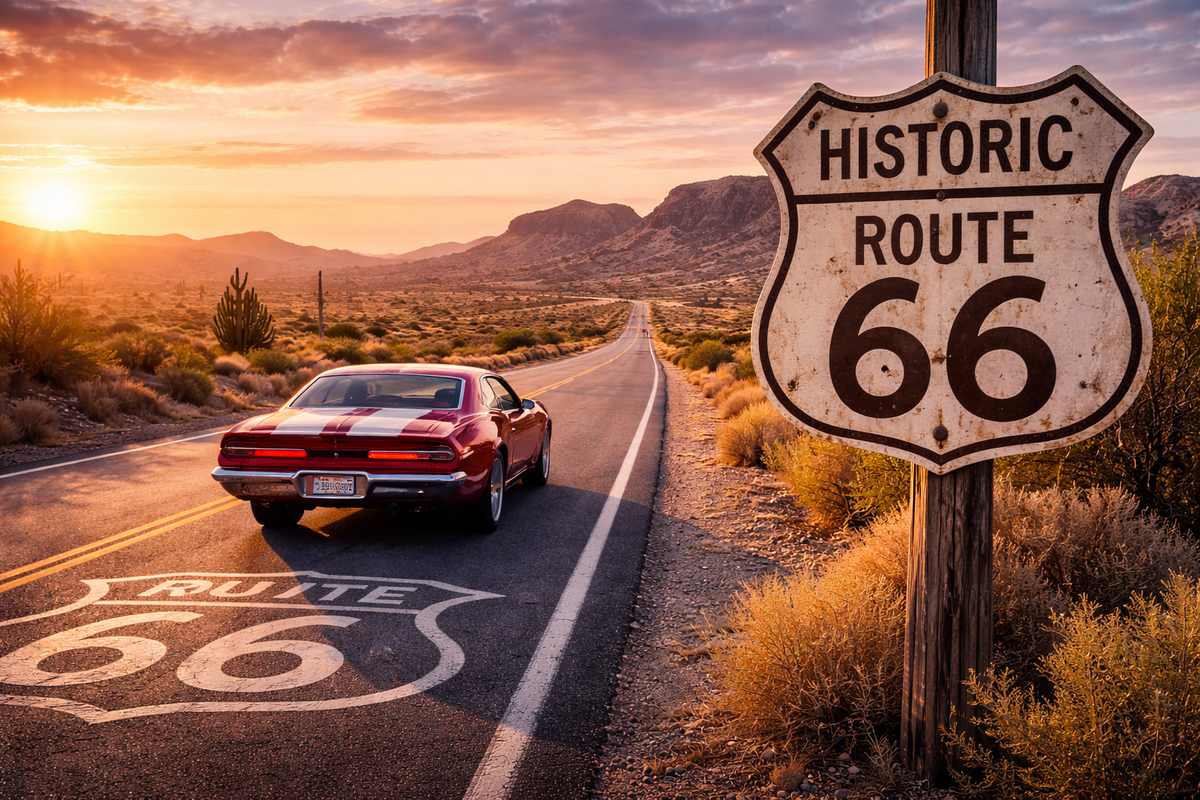
If Route 66 is neon-and-diners Americana, the Lincoln Highway is the “original cross-country story” drive. It’s history, geography, and car culture stitched together. Plan it smart, leave room for detours, and treat the route like a collection of preserved moments—not a single line you have to follow perfectly.

Leave a comment
This site is protected by hCaptcha and the hCaptcha Privacy Policy and Terms of Service apply.