
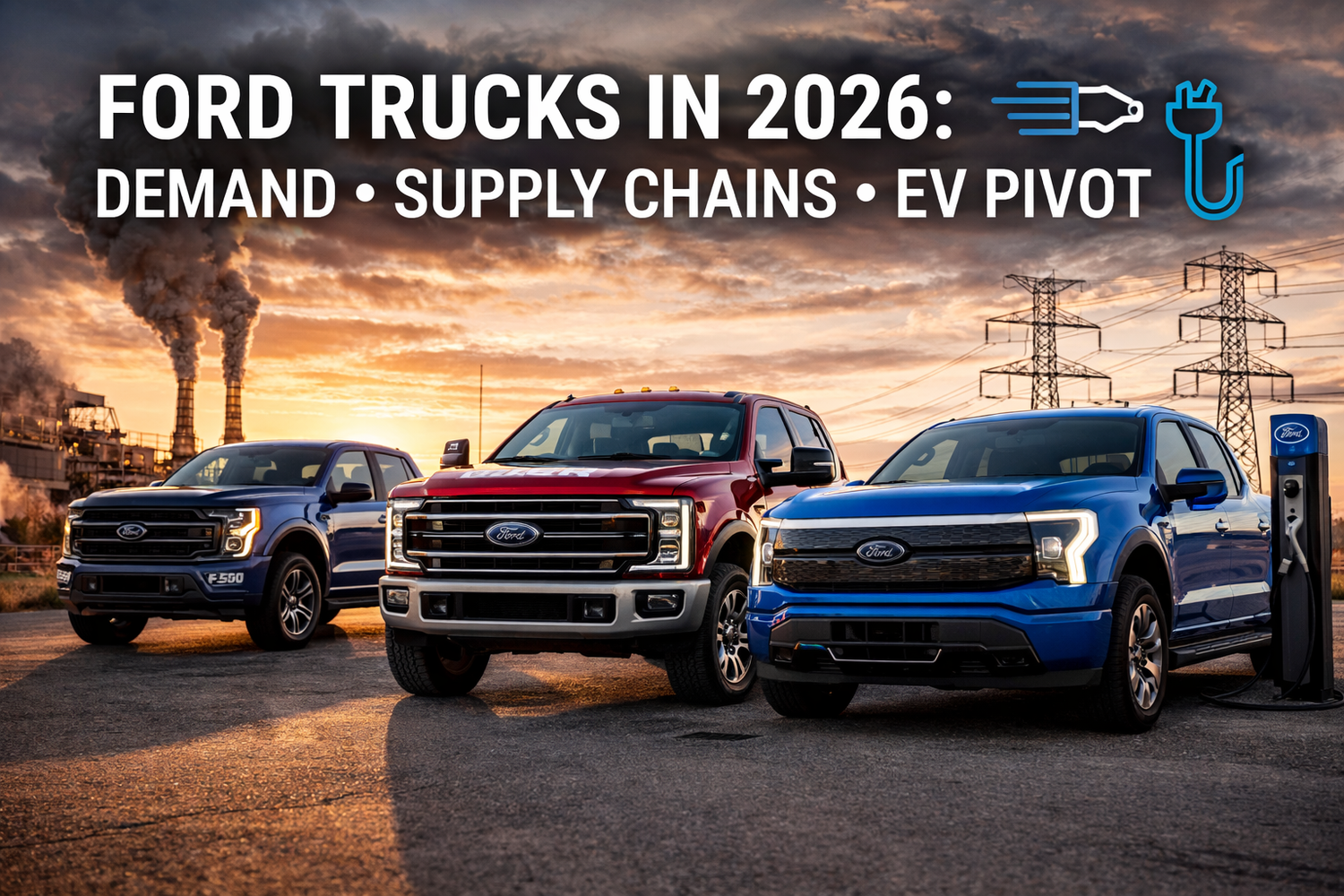
Ford’s truck business is still the backbone—F-150, Super Duty, and the entire Ford Pro ecosystem. But heading into 2026, the story isn’t just “trucks sell.” It’s demand + supply disruption + a recalibrated EV strategy plus one quiet trend buyers feel every day: trucks are becoming screen-first machines.
(1) Ford Pro is a profit engine (fleet + commercial + software). (2) Aluminum supply disruption is still impacting F-150 production and costs. (3) EV strategy is being recalibrated—with a bigger emphasis on “right-sized” electrification.
1) Ford Pro: The Quiet Truck Powerhouse
If you only watch consumer ads, you miss what’s happening behind the scenes. Ford Pro is where Ford bundles trucks and vans with fleet services, upfit support, telematics, and paid software. That matters because it turns “a truck sale” into an ongoing relationship—more like a platform than a one-time purchase.
In Ford’s most recent full-year results for 2025, Ford Pro generated more than $66B in revenue and reported $6.8B EBIT with a double-digit margin (per Ford’s earnings materials). That’s real “keep-the-lights-on” performance while the rest of the business deals with headwinds.

2) Supply Chain Reality: Aluminum Is a Bigger Deal Than Most People Realize
One of the biggest near-term storylines is aluminum supply disruption tied to a major supplier outage—important because the F-150 is heavily aluminum-intensive. Reports indicate the outage has impacted production, cost, and even forced Ford to import aluminum (with tariffs) as a stopgap. Ford has indicated supply normalization over a multi-month window into 2026.
What that means Real-world impact
- Some trims/regions may see tighter availability or longer lead times
- Pricing and incentives can shift as supply normalizes
- Ford’s margin protection becomes a bigger focus
What Ford is doing Mitigation
- Re-routing supply and importing aluminum where needed
- Adjusting production plans to recover lost volume
- Managing costs while keeping key truck lines flowing
3) EV Trucks: The Strategy Is Getting More Practical
Ford’s EV business has been a financial drag, which has pushed a more pragmatic approach: prioritize profitability and build products that match how truck buyers actually use their vehicles. Translation: towing, payload, cold weather, and long-distance use cases are forcing a capability-first mindset.
This doesn’t mean EV trucks are “over.” It means the next phase is less hype and more math—cost, charging reality, and powertrain choices that fit real owners.
4) The Screen Story: Ford Trucks Are Getting Bigger Displays and More “App-Like” Interiors
This is the trend most owners feel every day. Modern trucks are now built around the center display and the digital cluster: maps, towing menus, cameras, off-road pages, trailering checks, audio, connectivity—everything routes through screens.
F-150: 12-inch is the new baseline 2026
For 2026 F-150 models, Ford highlights a 12" center display across trims (examples: XL and XLT model pages), plus an available 12" productivity screen in the digital cluster on the main F-150 site. The result: fewer “small screen” trims and a more consistent tech experience.
Lightning: the big-screen blueprint 15.5"
Ford’s F-150 Lightning lineup includes configurations with a 15.5" touchscreen (Ford markets this prominently). Even if you don’t buy a Lightning, it signals where the interior design language is heading: larger displays + richer software.
Why screens are growing The “why”
- Cameras + towing tech: bigger screens make trailer camera views and towing workflows easier
- Connectivity packages: more in-vehicle apps/features mean the display is the control center
- Consistency: standardizing on larger displays reduces trim-to-trim “tech gaps”
Bigger screens don’t just look nicer—they collect more fingerprints, glare, dust, and micro-scratches because you touch them constantly. In a truck, that’s amplified (worksite dust, trail use, road trip nav tapping, kids in the passenger seat). Keeping screens readable is now part of the ownership experience.
5) What Truck Buyers Should Watch in 2026
- Availability swings: as supply disruptions fade, certain trims/packages may become easier to find.
- Pricing/incentives: watch where Ford supports volume vs. protects margins, especially on higher trims.
- Powertrain mix: more “practical electrification” (hybrids/efficiency plays) alongside gas and EV offerings.
- Tech expectations: 12"+ displays are becoming table stakes; software + connectivity features will differentiate trims.
Bottom Line
Ford’s truck division is still the core engine, but 2026 is about execution under pressure: keep building trucks despite supply headwinds, protect profit through Ford Pro, and evolve the lineup without betting everything on one powertrain. Meanwhile, trucks keep becoming more digital—bigger screens, more cameras, more software—and that changes what “ownership” feels like.
- Ford Q4 / Full-Year 2025 Earnings Press Release (PDF): Ford Pro revenue/EBIT figures
- Ford.com 2026 F-150 model pages (XL/XLT) + main F-150 page: 12" center display / available 12" cluster references
- Ford.com F-150 Lightning page: 15.5" touchscreen reference
- Reporting on Novelis aluminum plant outage and Ford supply normalization timeline
Note: This post focuses on current public reporting and Ford’s published materials. Trim equipment can vary by package and market—always verify on the build sheet for the exact truck.

Leave a comment
All comments are moderated before being published.
This site is protected by hCaptcha and the hCaptcha Privacy Policy and Terms of Service apply.